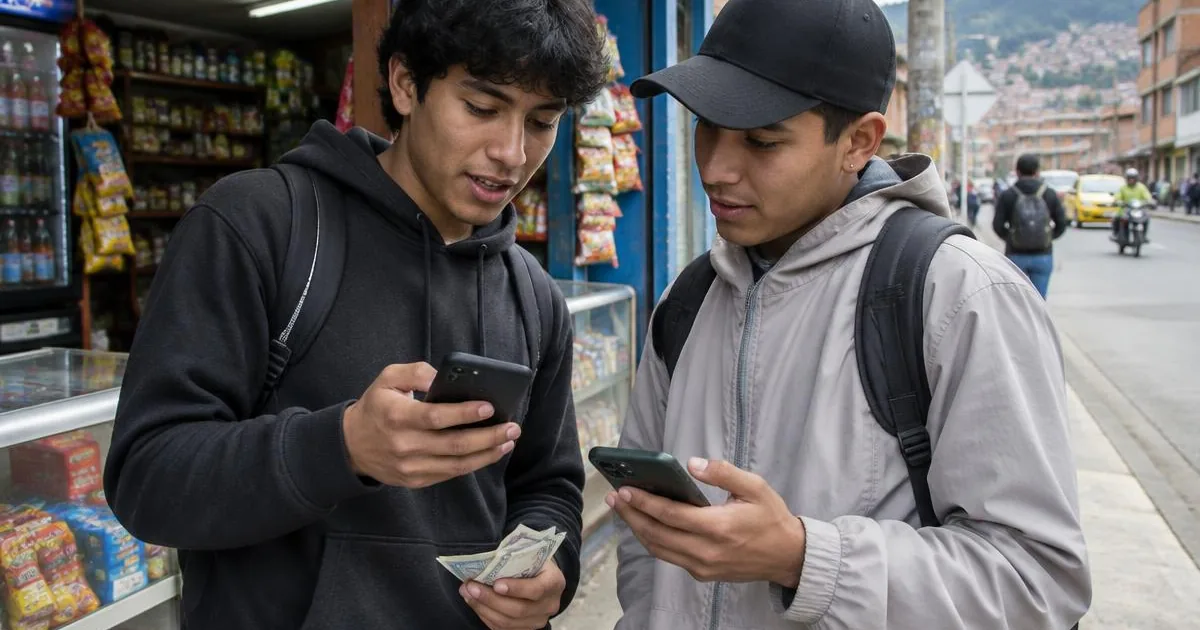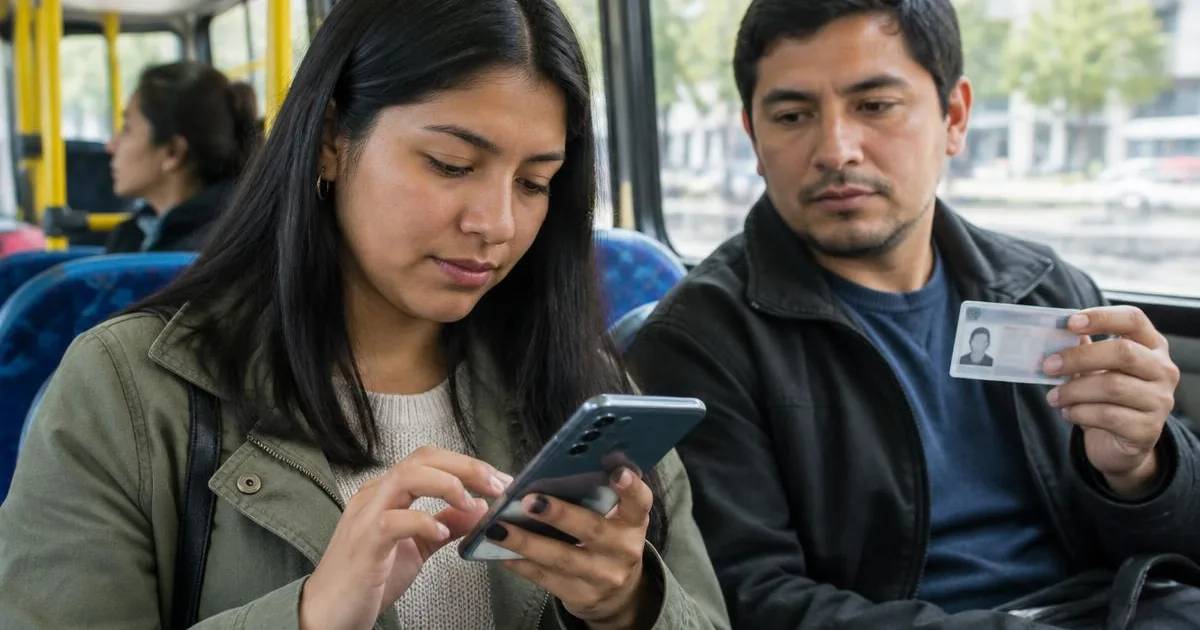
If your team is preparing a launch in Colombia, Mexico or anywhere else in the region, you have probably already run QA in your home market and maybe a round of remote tests with a global panel. Crowdtesting Latin America is the step that usually gets skipped: putting the product in the hands of people who actually live there, on the phones they actually own, connected to the networks they actually use. That is where most of the surprises show up, and they are cheaper to find in a test than in your app store reviews.
This guide covers why in-market testing matters, how a crowdtest runs and what to ask a local vendor.
Why in-market testing changes the results
A test lab in Austin or Madrid can reproduce a lot. It cannot reproduce a commuter in Bogotá switching between a prepaid data plan and a café's Wi-Fi in the middle of a registration flow. A few conditions consistently change the outcome of a test in the region.
Devices. A large share of users in Latin America run low and mid-range Android phones, often a few years old, with limited storage and aggressive battery savers. Camera quality matters a lot if your onboarding asks for a selfie or a photo of an ID. A flow that works on a flagship can fail quietly on a phone that compresses images or kills the app in the background.
Networks. Prepaid data, packages that run out mid-month and unstable coverage outside big cities are normal. Timeouts, half-loaded screens and duplicated submissions are common in real use and rare in the office.
Payment habits. Cash is still important, and so are wallets, bank transfers and in-store payments. A checkout designed around a credit card leaves out a big part of the market. Testing should include the payment methods your users will really choose.
ID documents. Colombian users have a cédula, Mexican users have an INE card and a CURP, and foreign residents carry other documents. Document scanning, number formats and validation rules all need to be tested with the real thing.
Trust. Fraud is a real concern for users here, and many people are cautious about giving personal data to an app they do not know yet. How you explain why you need a photo of their ID or access to their contacts affects completion.
Spanish variants. Spanish in Colombia, Mexico, Panama or Venezuela is not the same. A word that sounds neutral in one country can sound odd or formal in another, and users notice.
What crowd testing LATAM actually looks like
A crowdtest is a structured study, not an open invitation to "try the app". A typical round looks like this:
- Brief and scope. You define the flows to test (for example account opening, first top-up and first transfer), the build or prototype, the countries and the profiles you need.
- Recruitment and profiling. The vendor selects participants from its community using criteria like age, city, device, carrier, banking habits and document type. Good recruitment is most of the job.
- Scenarios. Each participant gets realistic tasks, written in their own variant of Spanish, with clear instructions on what to record.
- Execution. Participants complete tasks on their own devices and networks. Depending on the goal this can be unmoderated (screen recordings, task completion, questionnaires) or moderated sessions with a researcher.
- Bug and friction logging. Every issue is documented with device, OS version, carrier, steps to reproduce and evidence. Usability problems are documented alongside functional bugs, because users do not separate them.
- Analysis and report. Findings are prioritized by severity and impact, with recommendations your team can act on, and ideally delivered in English and Spanish so both headquarters and local teams can use them.
At Paruma we run this kind of study through our product evaluation service, which covers crowdtesting, UAT and error detection. For earlier stages, the same approach works with a clickable prototype through prototype evaluation.
Real user testing in Colombia, Mexico and beyond: what to measure
Bug counts alone will not tell you if you are ready to launch. A useful in-market test combines:
- Task success: did the person finish registration, payment or top-up without help?
- Errors and retries: how many attempts did identity validation take? Where did people go back?
- Comprehension: did users understand the value proposition and what each step was for?
- Perceived security and trust: did they feel safe sharing their data?
- Satisfaction and intent to recommend: would they use it again and tell someone about it?
- Technical evidence: device, OS, carrier, connection type and screenshots for every bug.
When you compare results across countries, keep the same scenarios and metrics so differences reflect the market, not the test design.
Paruma cases: Zinli and Davivienda
Two projects show what in-market testing finds that lab testing does not.
Zinli, a digital wallet tested in three countries. Zinli, a wallet based in Panama, wanted to improve its registration process. Paruma ran research with real users in Panama, Venezuela and Colombia, with different ages and different levels of familiarity with digital wallets, using a high-fidelity functional prototype of the new registration. Users had consistent experiences across nationalities, rated the information architecture positively, and pointed out where registration could be faster. A key lesson was the importance of instructions in colloquial, understandable language, with clear status and outcome at each step. The study also confirmed some market hypotheses and surfaced errors as users actually experienced them. You can read the full Zinli case.
Davivienda, identity validation at scale. Davivienda, one of the leading banks in Colombia, lets customers open accounts in its Davivienda Móvil app using facial biometrics and a photo of their ID. Paruma selected more than 150 participants with diverse profiles, considering devices, ages, races and identification document status, and ran them through account opening and transaction scenarios. The study found a significant number of retries in identity validation and confirmed that users feel more secure with this type of check. With those findings, effectiveness of the ID validation went from 70% to 90%, and the bank avoided affecting its more than 7.5 million app users with an inefficient process. Details are in the Davivienda ID validation case.
Device mix, document status and wording are local variables, and you only see their effect with local users.
How to brief a LATAM crowdtesting vendor
The quality of a crowdtest depends heavily on the brief. Before you sign, make sure you can answer these questions and that the vendor asks them too.
- Which countries and cities? Bogotá and Medellín behave differently from smaller cities. The same goes for Mexico City versus the rest of Mexico.
- Which profiles? Define age ranges, banked or unbanked, current users of competitors, document types, and any accessibility needs.
- Which devices and carriers? Ask for a device and OS distribution that matches your analytics or market research.
- Which build? Prototype, beta or production. Agree on test accounts, test cards or sandbox payments, and who resets data between sessions.
- What counts as a finding? Agree on a severity scale and a bug template before the first session.
- What language for deliverables? If your product team sits in the US or Europe and operations sit in Colombia or Mexico, ask for bilingual reporting.
- How is participant data protected? In Colombia, personal data is regulated by the Habeas Data law (Ley 1581 de 2012). Your vendor should explain how consent, anonymity and data storage are handled.
Also ask whether the vendor has its own community of users or resells a third-party panel. A vendor with its own community can profile people in more detail and recruit hard-to-find segments faster. Paruma, for example, has worked with real users since 2016, with presence in more than five countries, more than 2,500 Nomers in each country, more than 65 profiling criteria and access to more than 5,000 digital devices.
Common mistakes in LATAM crowdtests
- Testing only in the capital city and assuming results apply nationwide.
- Translating scenarios word for word from English, which confuses participants and biases results.
- Using only Wi-Fi and recent phones because that is what the recruited testers happened to have.
- Mixing bug reports and usability notes in different documents so nobody sees the full picture.
- Running the test one week before launch, when there is no time to fix what it finds.
The best time for in-market testing is when there is still room to change the flow: after the first functional build or with a high-fidelity prototype, and again before the public launch.
Frequently asked questions
What is crowdtesting in Latin America?
It is testing a digital product with real people who live in the target countries, using their own phones, carriers and home internet, following scenarios you define. The goal is to find the bugs and friction points that only appear in local conditions before customers find them.
How many testers do I need per country?
For usability findings, small rounds of about five users per segment, as Nielsen Norman Group recommends, catch most problems. For functional coverage across devices, carriers and document types you need more, and the number depends on how many combinations matter. Identity validation studies, for example, can require more than 150 participants.
Can I run one test for Colombia, Mexico and Central America at the same time?
Yes, as long as the vendor recruits real residents in each country and you treat each market as its own segment in the analysis. Copy, payment methods and ID documents change by country, so findings should be reported per market as well as consolidated.
How long does an in-market crowdtest take?
A typical evaluation takes one to four weeks depending on scope, from briefing and recruitment to the final report. A focused functional round on one flow is on the short end. Multi-country studies with interviews take longer.
Do testers need to see production data or real accounts?
Not always. Many studies run on a high-fidelity prototype or a beta build with test accounts. When the flow requires a real identity check or a real payment, the vendor should agree data handling rules with you in writing before the test starts.
Plan your in-market test
If you are launching or redesigning a product in Latin America and want to see how it behaves with real users on their own devices and networks, tell us about your flows, countries and timeline. We will propose a test plan with profiles, scenarios and deliverables in English and Spanish. Contact the Paruma team.